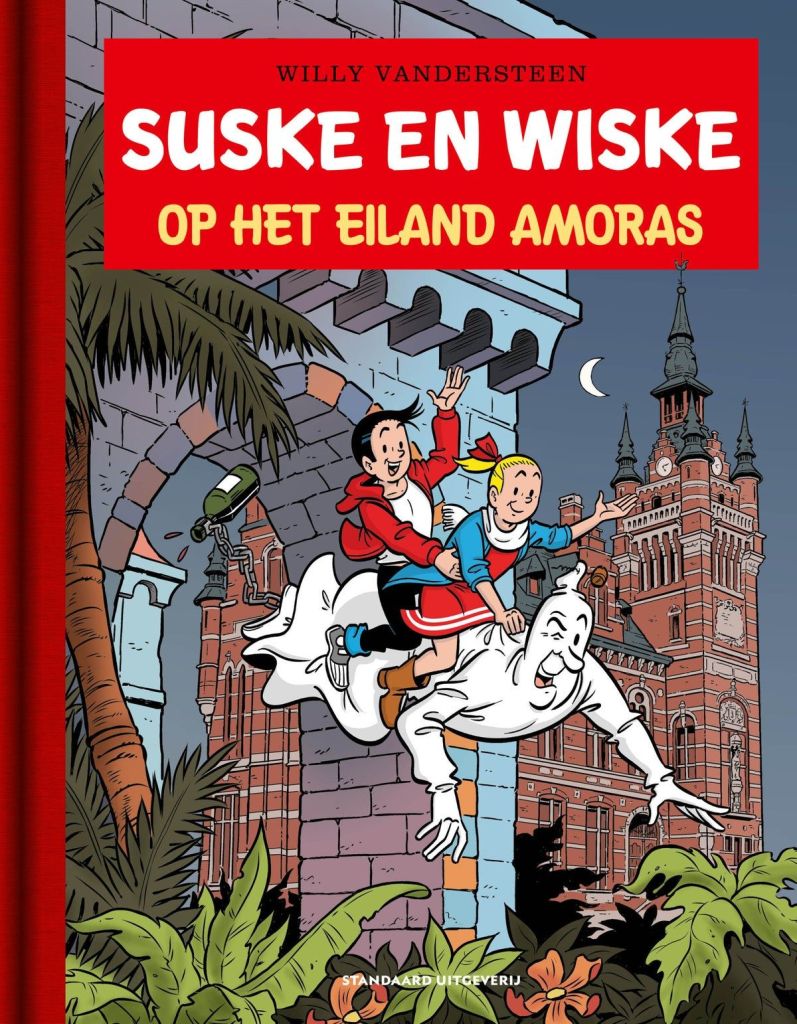
Details
- Writer/arist: Willy Vandersteen
- Publisher: Standaard Uitgeverij
- Issue number: 68
- Year of publication: 1945
- Genre: Adventure, comedy, satire
- English title: An Island Called Amoras
- Introducing: Suske, Professor Barabas
Premise
Wiske (Suzy) and Aunt Sidonia (Aunt Agatha) fish an old jar out of the Scheldt river, which brings them and Professor Barabas (Professor Barnaby) to the mysterious island of Amoras, where they meet Suske (Spike). When Sidonia and Barabas are taken prisoner, Suske and Wiske try to rescue them. They receive help from Sus Antigoon and join the battle against the island’s’ false rulers, the “Vetten” (the Fats).
Background
The creation of Op het eiland Amoras in 1945 was the definitive turning point for the Suske en Wiske (Spike and Suzy) series. It transformed from a simple gag-strip into a legendary adventure saga.
The most significant moment in this story’s creation was the replacement of Rikki, Wiske’s older brother. Willy Vandersteen felt Rikki was too similar to Tintin and, as an adult, solved problems too easily for Wiske.
To create more tension, Vandersteen “wrote Rikki out” and introduced Suske, a boy of Wiske’s own age, on the island of Amoras.
This established the balanced dynamic of two children facing the world together, which remains the heart of the series today.
Created immediately after World War II, the story reflected the societal anxieties of the time. The conflict between the “Vetten” (The Fat ones/The Rich) and the “Mageren” (The Lean ones/The Poor) was a direct metaphor for the social inequality and food shortages of the post-war era. Vandersteen used the 16th-century setting of the island to explore themes of tyranny and revolution through a lens of historical fantasy.
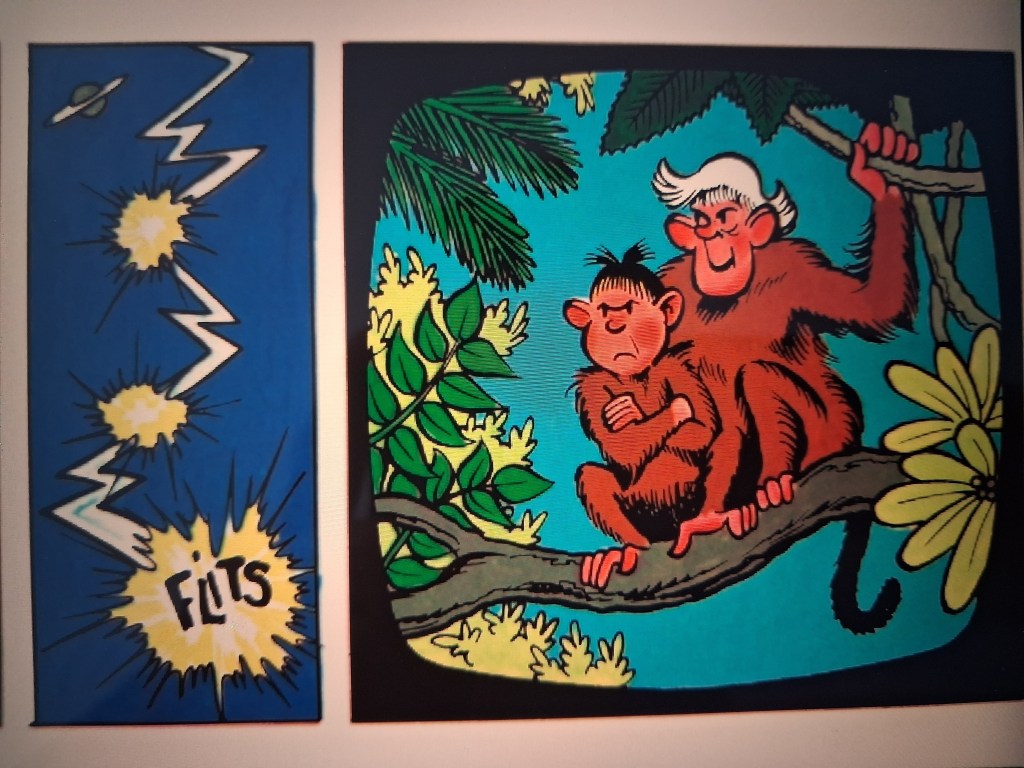
The story was originally published as a daily comic strip in the newspaper De Nieuwe Standaard:
- The Format: Two frames were published every day, forcing Vandersteen to master the art of the cliffhanger to keep readers coming back.
- The Language: In its original run, the characters spoke a thick Antwerp dialect. This was later polished into standard Dutch to appeal to a broader audience in both Belgium and the Netherlands.
Narrative
Willy Vandersteen has found his style here in this second by release order issue. The dark humor is gone and is replaced by Belgian/Flemish humour which fits it so much better.
The introduction of Suske was well done; him trying to rescue Wiske while he himself becomes the damsel in distress of sorts. The characters were pretty well-written, not necessarily well-layered just yet.
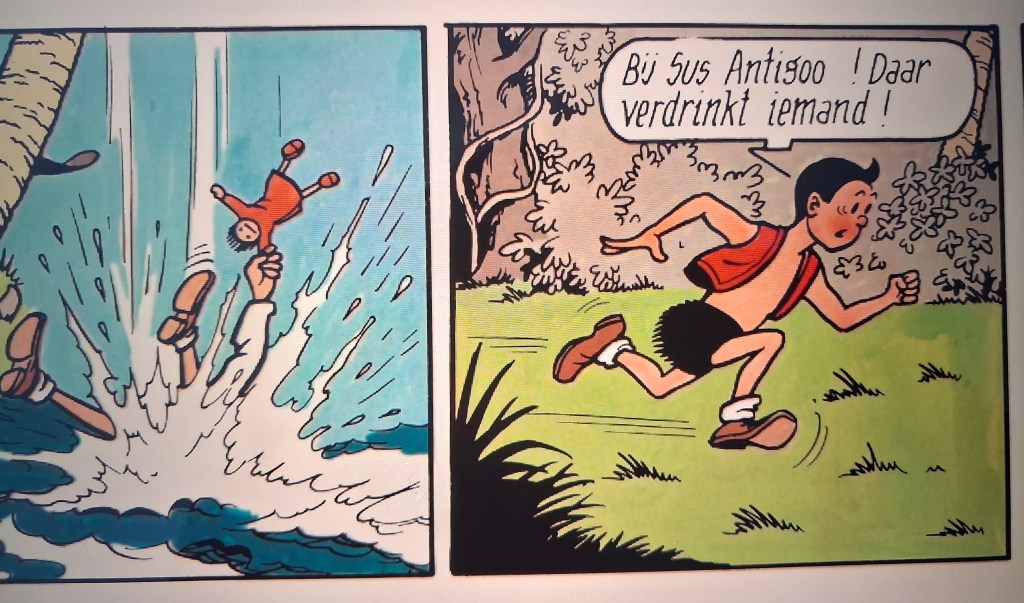
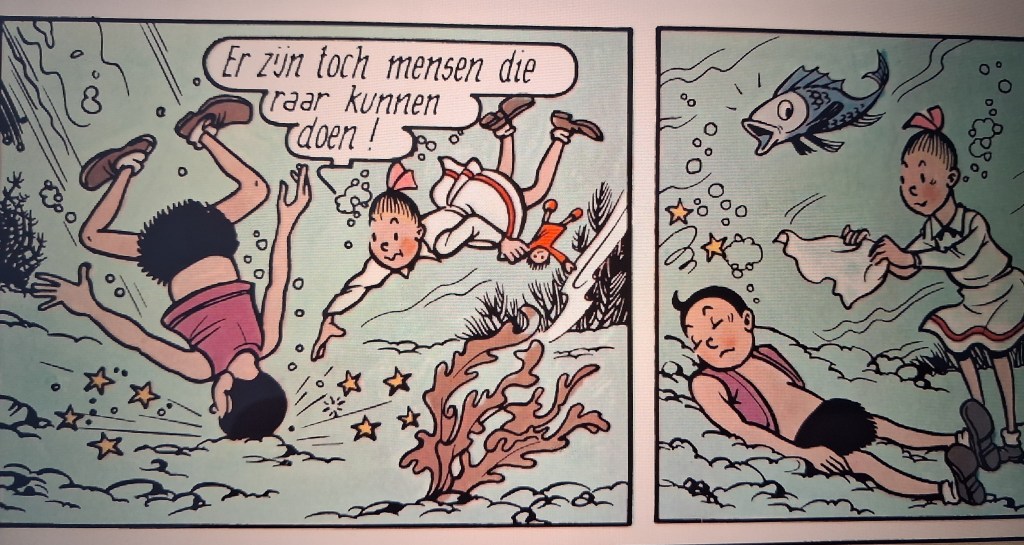
Wiske is your typical ENFP (Campaigner). She is the driving force behind the story. She often acts before she thinks. And has a high moral compass. She is also very fond of her doll Schanulleke.
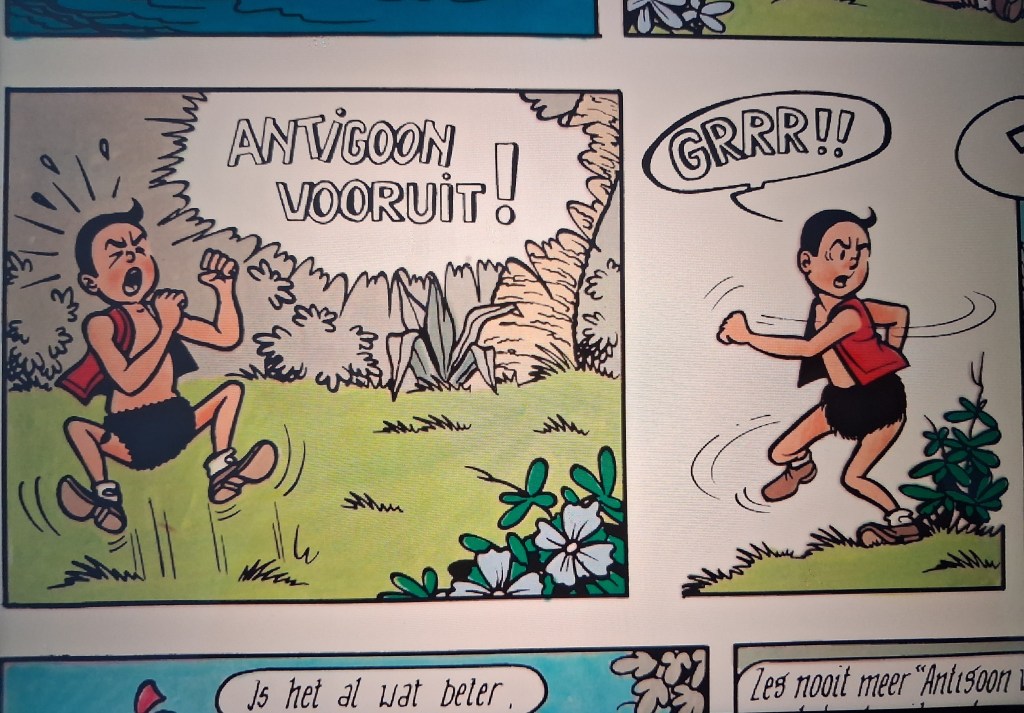
Suske is a ISFJ (the protector) which was seen by his very first appearance when he tries to save Wiske or with his “SUS ANTIGOON VOORUIT (FORWARDS)!” He is more impulsive in this issue however, which will change in future issues when he will become the reason where Wiske is the action.
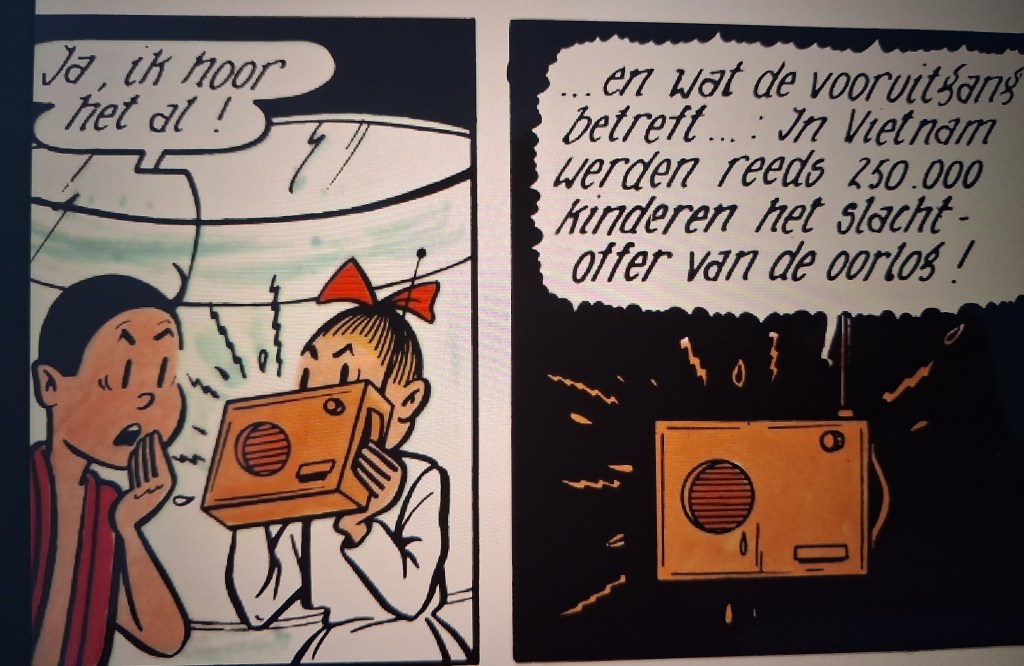
Aunt Sidonia is an ESFJ (The consul), whereas Prof. Barabas is an INTP (The logician) Sidonia is the glue that keeps everyone together, like her orating to the lean ones, while Barabas is the scatterbrained one, always thinking in numbers and facts, and we got introduced to his teletimemachine and the flying aircraft, the gyronef!
And of course we got Sus Antigoon, the drunken ghost who always keeps a bottle with him in order to roam free. His MBTI type is harder to unravel, because well, yeah, he is drunk. But he is most likely an ISFP or a very melancholic INFP.
I know that the Fats against the Leans was a direct metaphor for the social inequality and food shortages of the post-war era, but it felt very dated and of course discriminating.
The ending were they talk about the civilised world sums up how the society was and how it actually still is, which is actually quite depressing.
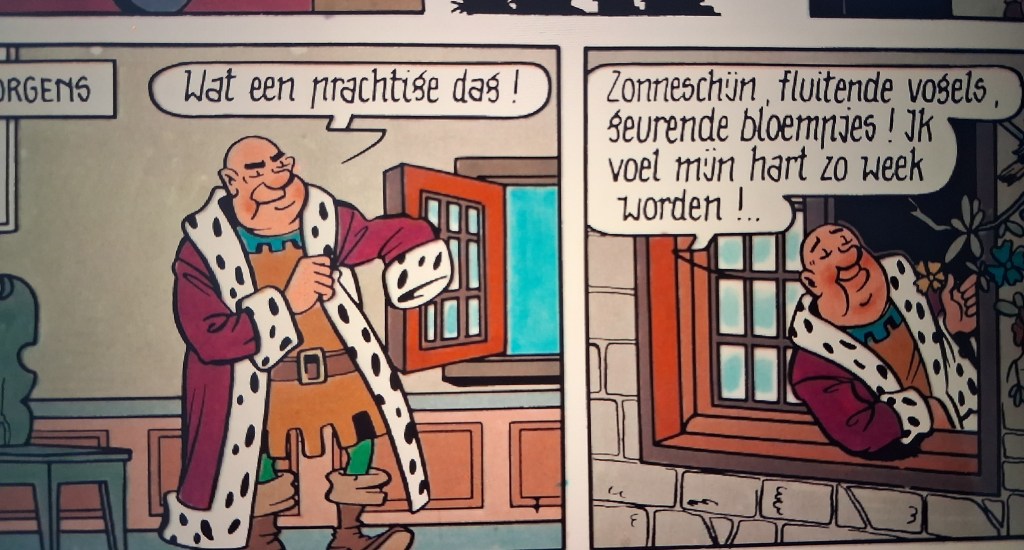
The villain, Jef Blaaskop is still a pretty good villain and one that gave the foundations for major Suske en Wiske villains to come.
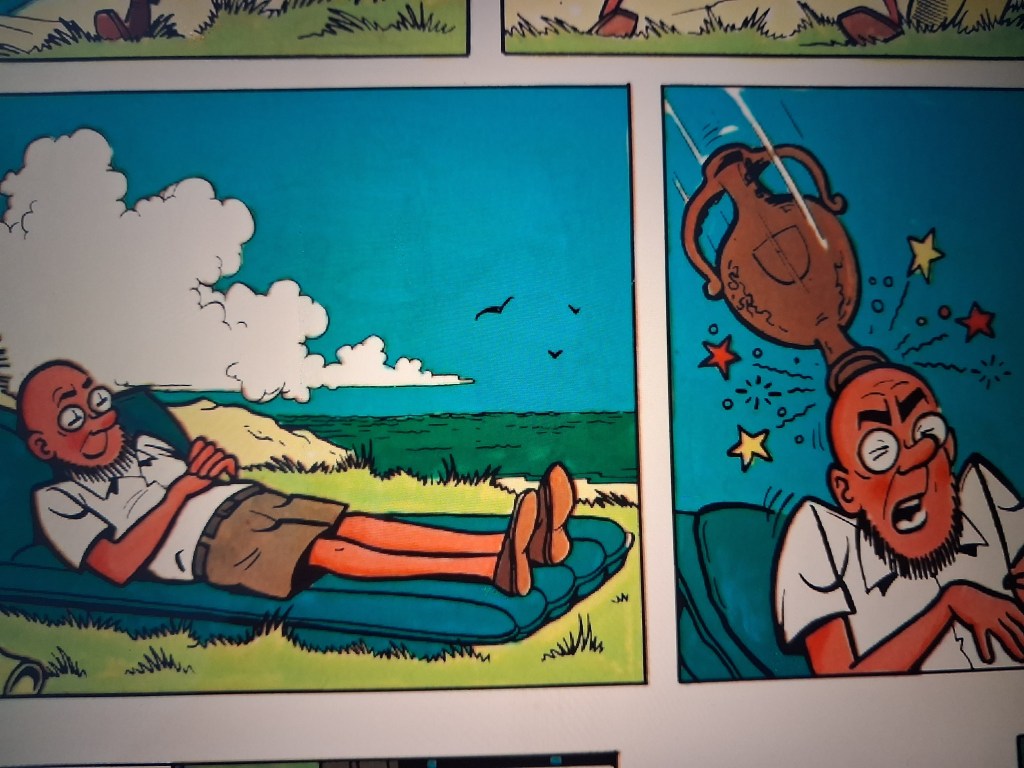
Moreover, Professor Barabas was mostly a damsel in distress in this one and what happened to Sidonia’s hair? Why is it white/transparent?
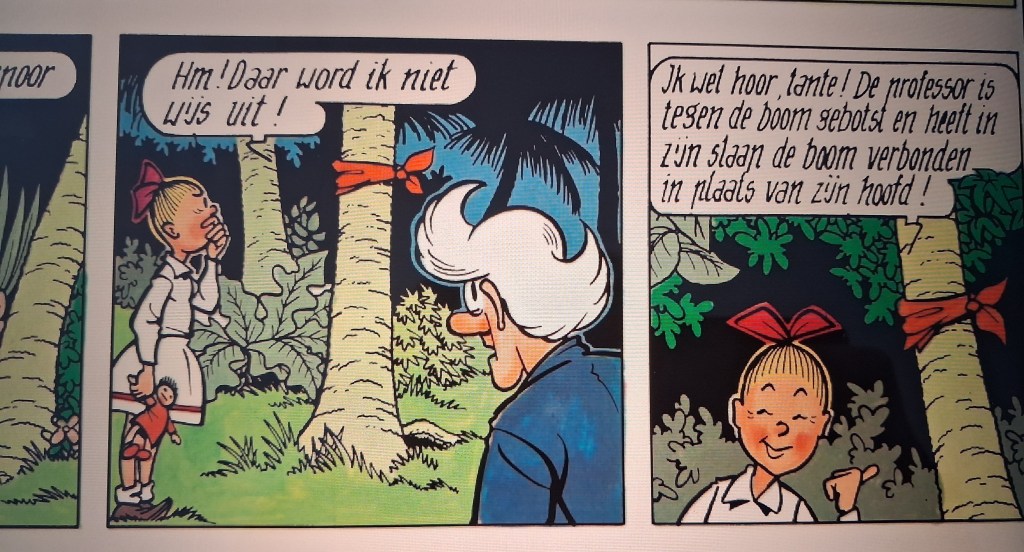
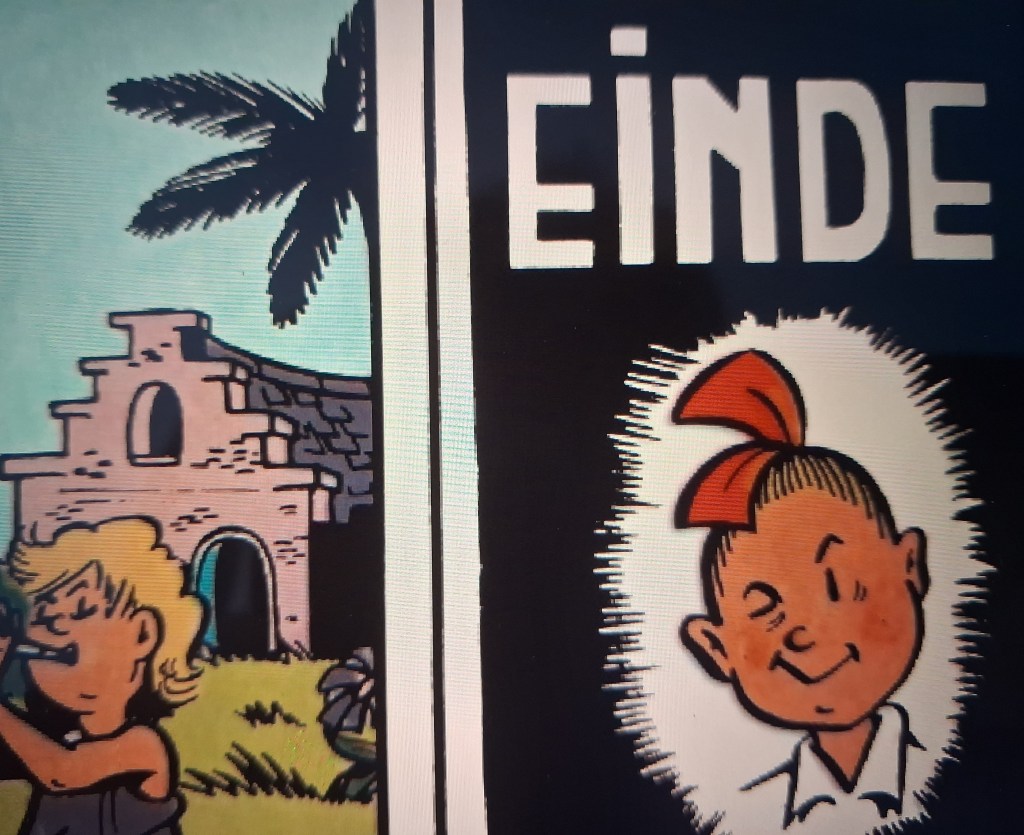
Lastly, we see the now famous end panel with Wiske winking to the viewer, which is now a common theme.
The art
Vandersteen also found his artistic style here. He combined several distinct styles to create the world of Amoras: The visual aesthetic of the city and its inhabitants was heavily inspired by the paintings of Pieter Bruegel the Elder. And of course the The “Clear Line”: While Vandersteen admired Hergé’s clean drawing style, he added more dynamic movement and expressive, “folk-style” humor that gave the series its unique Flemish soul.
Final verdict
Het Eiland Amoras again lay foundations that would become the Suske en Wiske we now all know and love today, and this album certainly has the soul and the charm. It isn’t a great album, due to some aging in quality (like the discrimination), but it certainly remains some of its charm. Without further a do I give this issue 3/5 ⭐️.
How would you rate this issue, please let me now below:


I’m not yet sure what to do in my next Suske en wiske review. I might do the next issue next or read all of the Golden age (Willy Vandersteen) ones and make one big review out of it. You’ll just have to see 😉
Thanks for reading and see you in the next one!
Yours,
Rain
 TAZÍ
TAZÍ 
Leave a comment