Details
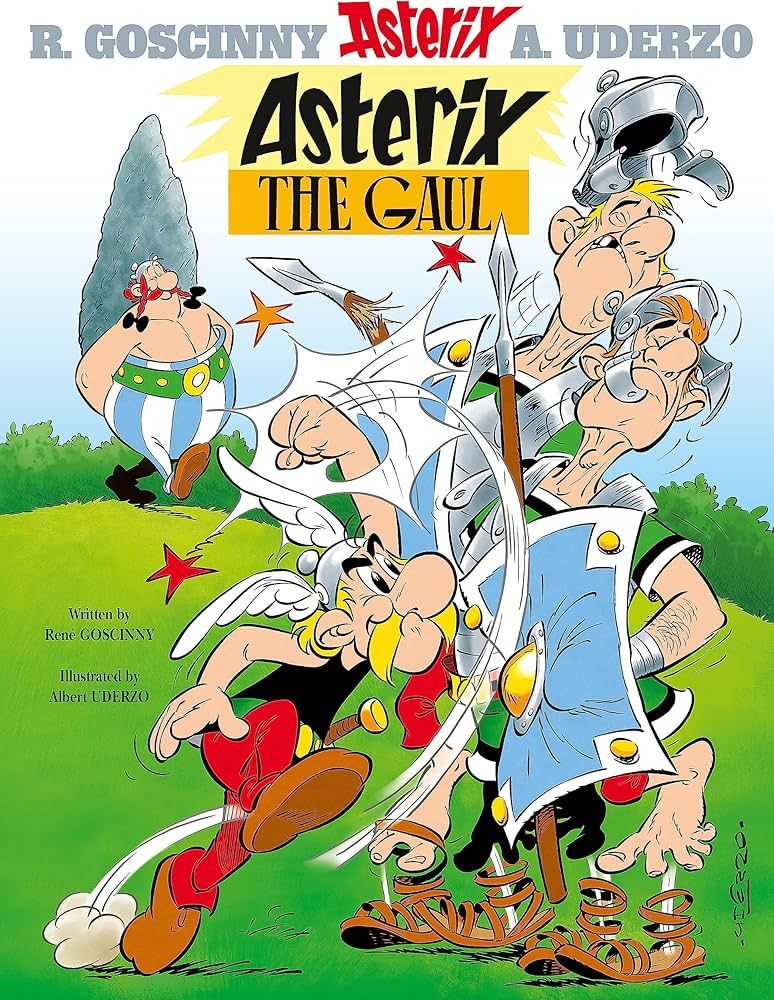
- Writer: René Goscinny
- Artist: Albert Uderzo
- Translators: Anthea Bell and Derek Hockridge
- Publisher: Dargaud
- Issue number: #1
- Year of publishing: 1969 (translation)
Premise
The Romans try to conquer the last standing Gaulish village by sending a spy to extract the formula of their strength potion.
Asterix is a mammoth in the comic world. In Europe he is a cultural icon and sold over 390 million comic books, especially in Germany and France and his comics has been translated to 111 languages, including, well yes: Latin! I have read one random Asterix album a year ago and thought it was pretty well-made. And me now being a comic book reviewer and living in Europe, I couldn’t help but to begin reading his comics. Starting with of course Asterix: The Gaul. So stay with me and read my review of this massive hit of a comic on the European continent.
Narrative
René Goscinny was a great storyteller. He had the feel for satire as well as action, which makes it fun for children and adults alike.
For children this comic provides much slapstick and visual comedy and black or white good vs. bad dynamics.
For adults this comic gives high brow satire, political commentary and historical puns.
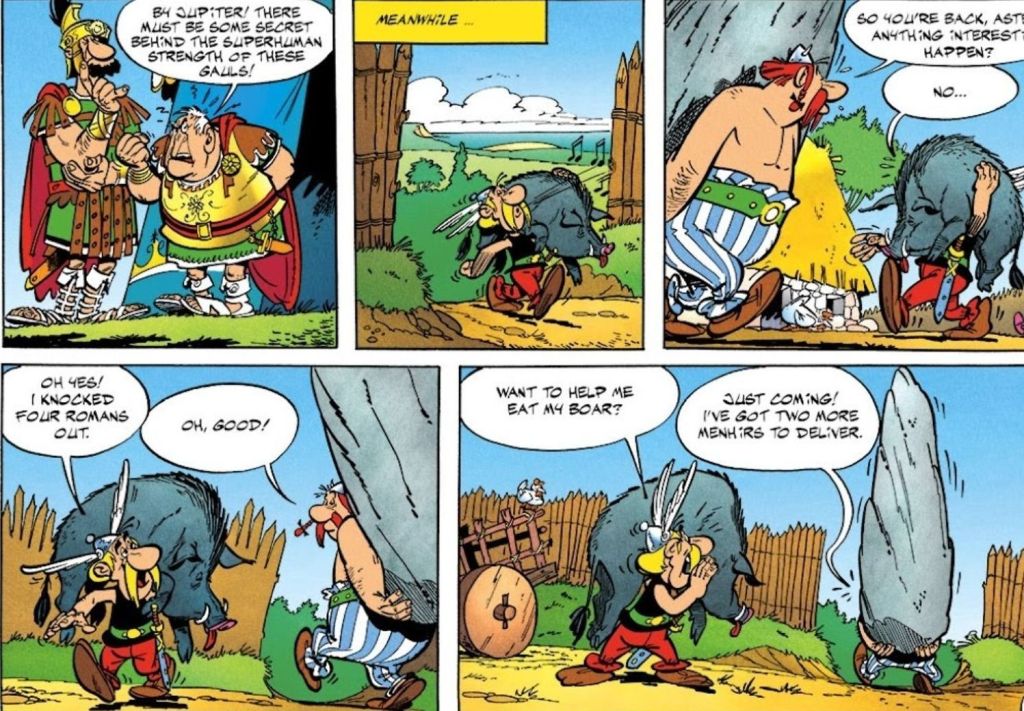
I like the the fact that Obelix is a menhir delivery boy , whatever that might be – but that’s of course part of the joke! Furthermore he likes wild boar and he may not take the strength potion because as a kid he fell in a well filled with it. Yeah, we got pretty much backstory for essentially a minor character in the first comic book.
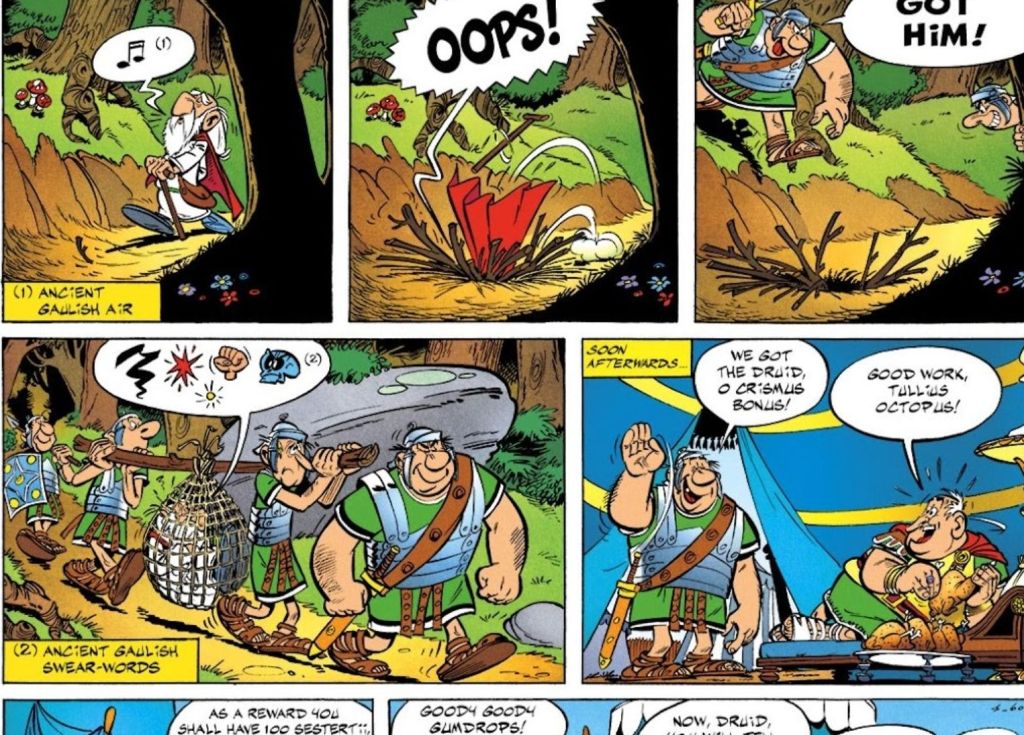
Asterix, on the other hand, hasn’t got much backstory, but what he does have is a mischievous personality – and he takes the strength potion (of course he does!), made by the village druid Getafix – who gets to play a pivotal role in this story.
From the other two frequently occurring characters, cacofonix and vitalstatistix, we got a glimpse; like Cacofonix singing (but horrendous singing that is) and Vitalstatistix being afraid the sky will fall down – two reoccurring tropes in the future.
The villain of the story is Centurion Crismus Bonus of Roman camp Compendium. And some side characters are the legionary Marcus Ginantonicus, the spy Caligula Minus and the ox dealer (the clown of the story). Gaul names end with -ix and roman names with -us. And I believe now is a good time to mention that almost every name in the series has a hidden satirical meaning. Here are some examples:
Asterix – a little footnote that is actually very important, Getafix (Get a fix) Fix = the potion. Cacofonix = cacofony, Crismus Bonus = a pun on Christmas bonus!
So without further a do lets get to the art, shall we?
The art
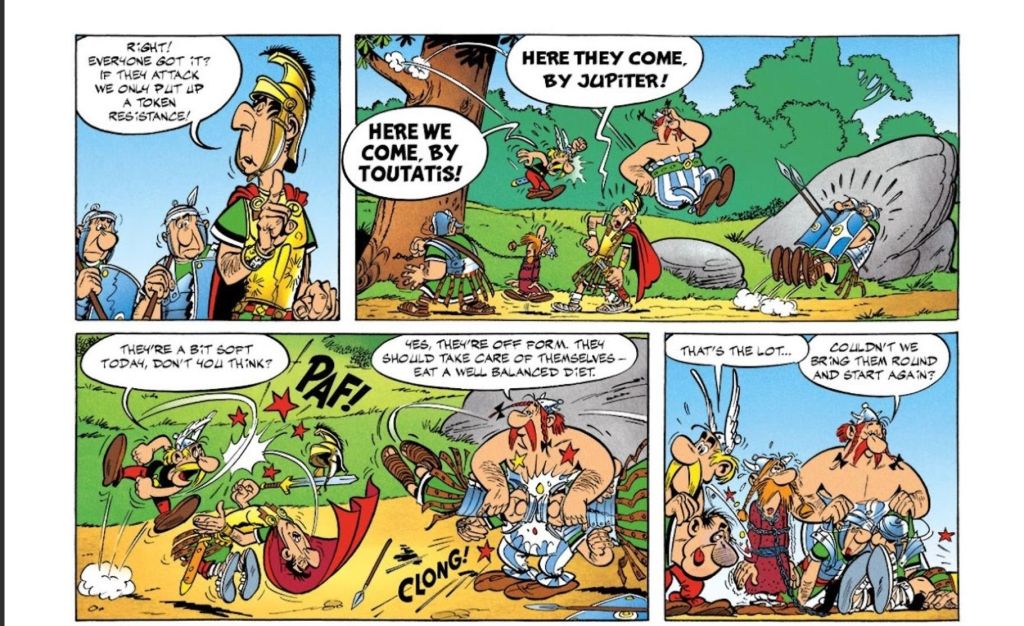
So Albert Uderzo is colorblind – good bet you didn’t know that! Yes, he was and he relied on others for the colors. He drew cartoonish and uses the now well-known ‘grog nose’ – Bulbous, fleshy noses that change to red when angry. Moreover, he drew large hands and feet and minimalist and precise dust clouds and motion trails for characters walking or running. Lastly, characters compress when hit and stretch when running, giving the static pages a cinematic energy.
Final verdict
Asterix: The Gaul is a great comic book and one that is, in my opinion, essential in comic book study and history. To call it a “turning point” for European comics might actually be an understatement. It was more like a cultural earthquake that shifted the tectonic plates of European comic history/bande dessinée (BD). It’s also an intelligent comic, no matter what the comic at first glance might tell you – looks deceive in this case. So with that having said, I give Asterix #1 a 4/5 ⭐️.
Thanks for reading and if you enjoy reading comics, please give European comics, such as Asterix, a try – I’m sure you won’t be disappointed!
How many stars would you give to Asterix: The Gaul? Please, let me know below:


See you next time!
Yours,
Rain
 TAZÍ
TAZÍ 
Leave a comment